The old retail journey was a funnel: awareness, consideration, purchase, in roughly that order. That model is collapsing. Today a shopper discovers a product through an influencer's video, gets a personalized recommendation mid-scroll, pays in four instalments, and has it delivered the same day — all without ever visiting a store or a search bar. The journey isn't a funnel anymore; it's a personalized, channel-blurred loop, and AI sits at the center of it.
This piece looks at the forces redrawing the retail customer journey — AI personalization, social commerce, flexible payments, and faster fulfilment — and what the growth data implies for where retail is heading.
Social commerce alone was worth an estimated US$1.2–1.7 trillion in 2024 and is forecast to grow at roughly 23–30% a year through 2030 (estimates vary widely by research firm — IMARC, Grand View Research, Global Industry Analysts). Asia-Pacific already accounts for the majority of that spend, which makes this shift especially relevant for India.
The end of the linear funnel
The classic purchase funnel assumed a shopper moved in stages, at their own pace, largely on the retailer's owned channels. None of those assumptions hold now. Discovery happens on social platforms, recommendations are generated in real time, payment is decoupled from cash-on-hand, and delivery is near-instant. The journey is shorter, less predictable, and far more personalized — and the retailers winning are the ones designing for the loop, not the funnel.
AI personalization as the new engine
At the heart of the shift is AI-driven personalization: recommendation engines that tailor what each shopper sees based on behavior, context, and intent. This has moved from a nice-to-have to the core engine of conversion, and it is among the fastest-growing layers of the retail-technology stack. Personalization now shapes discovery, merchandising, pricing, and retention across the journey.
Personalization used to mean "Hi, [First Name]." Now it means an experience assembled in real time for an audience of one — and shoppers increasingly expect nothing less.
Key insight: Personalization has crossed from differentiator to baseline expectation. The competitive question is no longer whether to personalize but how well your data and models do it relative to rivals.
Social commerce collapses discovery and purchase
Social commerce — buying directly within social and influencer-driven experiences — is compressing discovery and purchase into a single moment. Growing at an estimated 23–30% a year (per multiple market-research firms), it's one of the fastest-moving forces in retail, shifting power toward platforms and creators and away from traditional search-and-store discovery. For many younger shoppers, the feed is the store.
Flexible payments and fast fulfilment
Two more forces complete the new journey. Buy Now, Pay Later (BNPL) has reshaped the purchase moment by decoupling buying from immediate cash — tending to lift conversion and average order value, especially among younger consumers. And last-mile delivery and fulfilment infrastructure has made speed a competitive battleground, as same-day and next-day delivery shift from premium perk to baseline expectation. Both are growing quickly, though at different rates and off different bases.
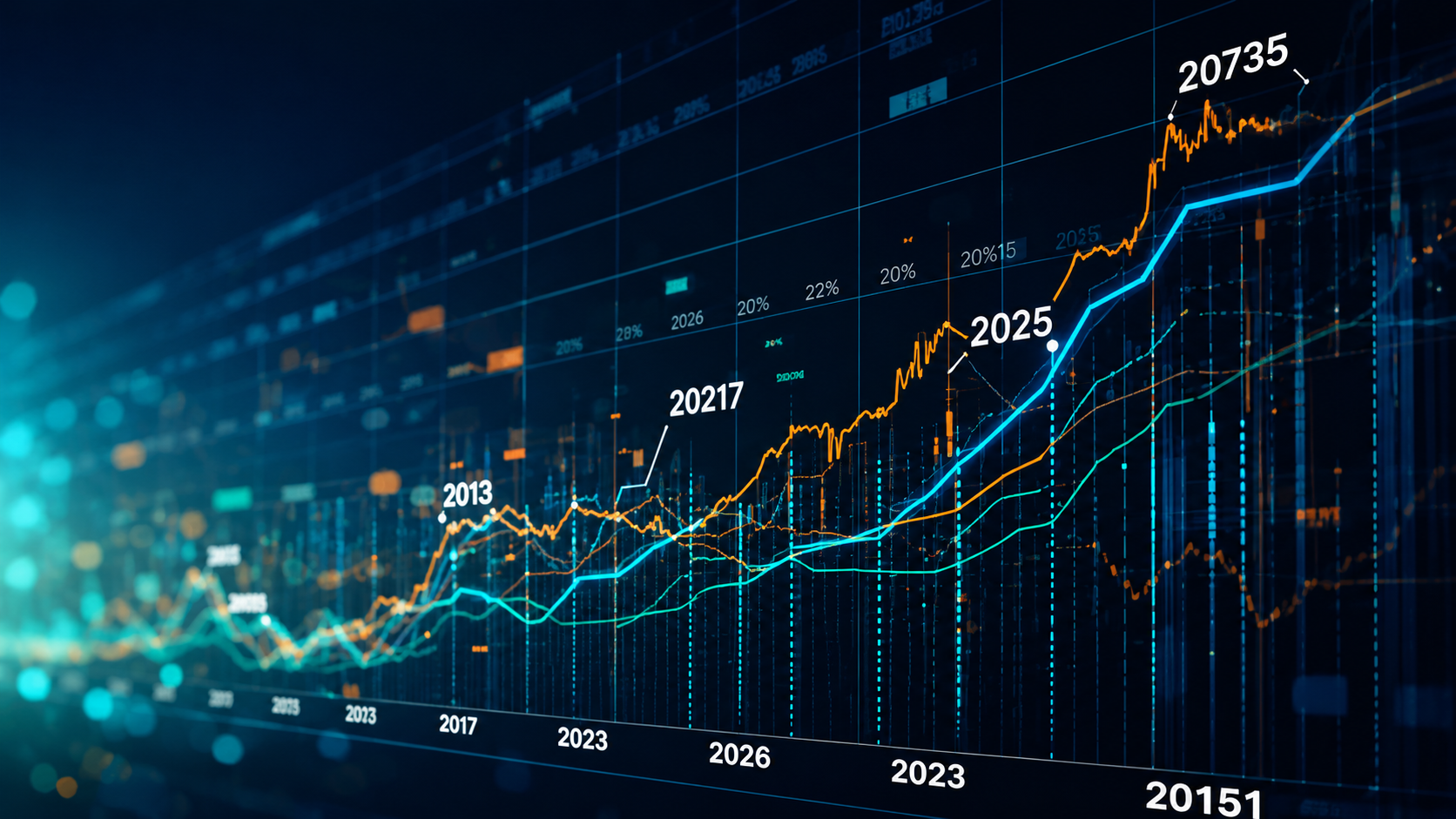
Personalization, social commerce, flexible payments, and fast fulfilment are growing at very different rates — and reshaping different parts of the journey.
Key insight: These forces compound. AI personalization drives discovery, social commerce closes it instantly, BNPL removes the payment barrier, and fast fulfilment delivers — together collapsing a journey that used to take days into one that takes minutes.
What it means for retailers
For retailers, the strategic implications are significant. Personalization capability — and the data and models behind it — is becoming a core competitive asset. Discovery budgets are migrating toward social and creator channels. The payment and fulfilment experience now directly shapes conversion. And because all of this is changing fast, the retailers that win will be the ones reading real-time shopper behavior and adapting continuously, rather than planning against last year's journey. Understanding which of these forces matters most for your specific customer base is itself a research question worth answering before reallocating budget.
An India example
India is one of the clearest places this plays out. A mid-market fashion brand there discovers that its next growth cohort — tier-2 and tier-3 shoppers — doesn't begin on the brand's website or app at all. They discover products through regional-language creators on short-video platforms, ask questions in the comments, and expect cash-on-delivery or a BNPL option at checkout. A retailer that keeps spending on search and its own storefront is fishing where these buyers no longer swim. The fix isn't a bigger ad budget; it's research into where this specific cohort actually discovers, decides, and pays — then rebuilding the journey around that.
Frequently asked questions
How is AI changing retail personalization? AI recommendation engines tailor discovery, merchandising, and offers to each shopper in real time, making personalization the core conversion engine rather than a cosmetic touch — and one of the fastest-growing layers of the retail-technology stack.
What is social commerce? Buying directly within social and influencer-driven experiences, compressing discovery and purchase into one moment. It's one of retail's fastest-growing channels — estimated at over US$1 trillion globally and growing at roughly 23–30% a year — and it shifts power toward platforms and creators.
How does BNPL affect retail sales? Buy Now, Pay Later decouples purchase from immediate cash, tending to lift conversion and average order value — especially among younger shoppers — though its effect on repeat purchase and returns varies by category.
Why does last-mile delivery matter so much now? Fast delivery has shifted from premium perk to baseline expectation, making fulfilment a competitive battleground where speed and reliability directly influence conversion.
Is social commerce bigger in India than in Western markets? Proportionally, yes — Asia-Pacific accounts for the majority of global social-commerce spend, and India's mobile-first, creator-driven, cash/BNPL-friendly shopping behavior makes social and conversational commerce central rather than supplementary. A journey strategy built for a Western funnel will misread the Indian shopper.
Future outlook
The retail journey will keep getting shorter, more personalized, and more channel-blurred as AI deepens and new commerce surfaces emerge. The retailers that thrive will treat the customer journey as a living system to be continuously researched and optimized — not a fixed funnel to be managed. The data is moving too fast for annual planning to keep up.
The question for every retailer: do you understand your customer's actual journey today — or the one from your last planning cycle?
Key takeaways
- The linear funnel has given way to a personalized, channel-blurred loop.
- AI personalization is now the core conversion engine and a baseline expectation.
- Social commerce (~US$1T+, growing ~23–30% a year), BNPL, and fast last-mile delivery compound the shift.
- Winning retailers read real-time behavior and adapt continuously.
By Zapulse Research Team · Published Jun 15, 2026 · 8 min read · E-Commerce & Retail