Every few years a technology arrives that's supposed to make market researchers obsolete. AI is the latest — and the most genuinely transformative. It can read and synthesize volumes of data no human team could process, surface patterns analysts would miss, and do in minutes what used to take days. The instinct is to conclude that the analyst's job is over.
The reality is more interesting. AI is rewiring how research gets done, but it's elevating the human role rather than erasing it. This guide maps what AI now does brilliantly, what it still can't do, and why the combination beats either alone.
Millions of data points can be processed and pattern-matched by an AI engine in the time it takes an analyst to read a single report. The bottleneck has moved from gathering to judging.
What AI now does brilliantly
AI has genuinely transformed the mechanical layers of research:
- Synthesis at scale: processing millions of secondary data points — reports, filings, news, transcripts — and distilling them in moments.
- Pattern detection: surfacing correlations and signals across datasets too large for humans to hold in their heads.
- Speed: collapsing the time-consuming parts of research from days to minutes.
- Always-on monitoring: continuously scanning for change rather than checking periodically.
This is real and significant. The parts of research that were slow, repetitive, and volume-bound are exactly where AI excels.
What AI still can't do
But the parts that create the most value remain stubbornly human:
- Judgment: deciding which patterns matter for your specific decision and which are noise.
- Context: understanding the business, the stakes, and the unstated question behind the question.
- Primary insight: AI can only synthesize what already exists. It cannot interview a buyer, observe a behavior, or extract tacit knowledge that's never been written down.
- Accountability: standing behind a recommendation that a board will bet millions on.
AI can tell you what the data says. It can't tell you what to do about it — or take responsibility for the answer.
Key insight: AI excels at the what; humans own the so what. The synthesis is increasingly automated; the interpretation, the judgment, and the original primary insight are not.
The new division of labor
The emerging model isn't human or machine — it's a deliberate split:
- AI handles the heavy lifting: gathering, synthesizing, and pattern-matching vast secondary data instantly.
- Humans handle the high-judgment work: framing the right question, conducting primary research, interpreting findings in context, and making the call.
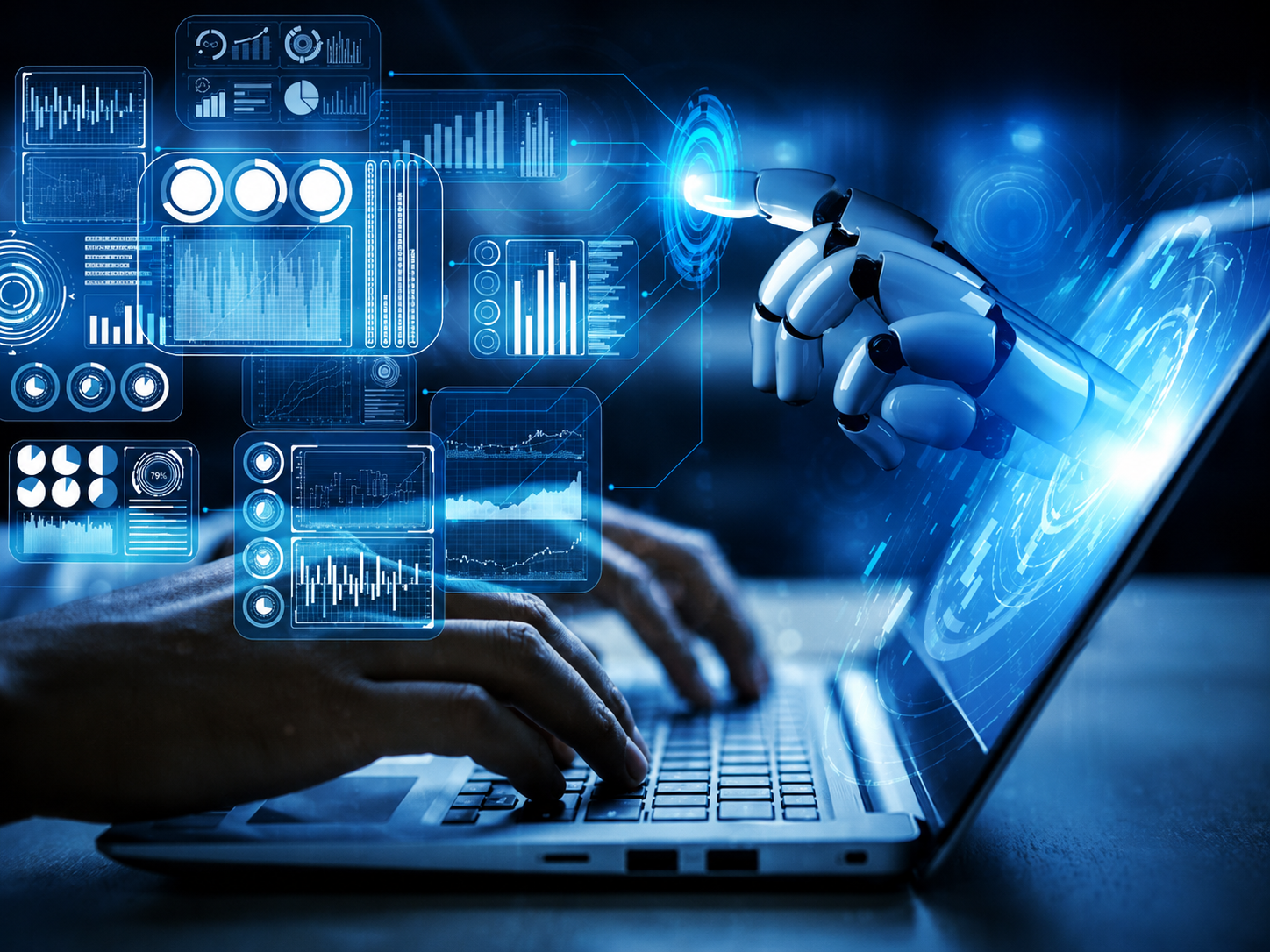
AI compresses the synthesis layer; human analysts own framing, primary research, and judgment.
Key insight: The winning configuration isn't AI replacing analysts or analysts ignoring AI — it's analysts amplified by AI, freed from synthesis drudgery to focus on judgment and primary insight.
Why the human matters more, not less
Here's the counterintuitive consequence: as AI makes generic, synthesizable intelligence abundant and cheap, the premium on what AI can't produce rises. Verifiable, human-led primary research — the buyer interview, the field observation, the expert's tacit knowledge — becomes the scarce, defensible asset precisely because it can't be generated from existing text.
In a world where everyone can generate a competent-looking AI summary, advantage flows to whoever pairs that speed with genuine human insight and judgment. AI raises the floor for everyone, which makes the human ceiling matter more.
A worked example
A consumer-electronics brand asks an AI engine to size and explain demand for a new wearable in India. In minutes it returns a clean synthesis of every public report, news item, and filing — a genuinely useful starting point that would have taken an analyst days. But the synthesis confidently repeats a market figure that, on inspection, traces back to a single dated source, and it has no read at all on why buyers in tier-2 cities abandon wearables after three months. A human analyst catches the stale figure, commissions a dozen buyer interviews to find the real churn driver (battery anxiety and after-sales fear), and turns a tidy-but-shallow summary into a decision the brand can act on. AI did the first 80% in minutes; the human did the 20% that actually de-risked the call.
Where AI quietly goes wrong
The risks are as important as the capabilities. AI synthesis can repeat a confident error from its sources, present a single-sourced figure as consensus, miss the most recent shift if it isn't yet well-documented, and produce fluent text that sounds authoritative regardless of whether it's grounded. None of this makes AI less valuable — it makes the human verification layer non-negotiable. The teams that get burned are the ones that treat AI output as a finished answer rather than a first draft to be checked.
Frequently asked questions
Will AI replace market researchers? No. AI automates synthesis and pattern detection, but framing the right question, conducting primary research, interpreting in context, and owning the recommendation remain human. AI amplifies analysts rather than replacing them.
What does AI do well in market research? Processing and synthesizing huge volumes of secondary data, detecting patterns across large datasets, and monitoring markets continuously — all far faster than human teams.
What can't AI do in research? It can't apply business judgment, understand unstated context, generate primary insight from buyers and experts, or take accountability for a high-stakes recommendation.
How should companies use AI in research? Let AI handle synthesis and monitoring at speed, and focus human experts on framing, primary research, interpretation, and decision-making — combining machine scale with human judgment.
What are the risks of relying on AI for market research? AI can repeat a confident error from its sources, present a single-sourced figure as consensus, and miss very recent shifts that aren't well-documented yet — all in fluent, authoritative-sounding text. Treat AI output as a first draft to be verified by a human and validated against primary evidence, not a finished answer.
Future outlook
AI will keep absorbing more of the mechanical layer of research, and that's a good thing — it frees human expertise for the work that actually moves decisions. The firms that thrive won't be the ones that bet entirely on automation or the ones that ignore it; they'll be the ones that fuse machine speed with human judgment and original primary research into a single capability.
As generic intelligence becomes free, the question sharpens: what insight do you have that an AI couldn't have generated for your competitor too?
Key takeaways
- AI excels at synthesis, pattern detection, and speed at scale.
- It can't supply judgment, context, primary insight, or accountability.
- The winning model is analysts amplified by AI, not replaced.
- As generic intelligence gets cheap, human-led primary research grows more valuable.
By Zapulse Research Team · Published Jun 15, 2026 · 8 min read · AI & Technology